Alcohol detox is often spoken about as if it were a rough weekend, a test of willpower, or a private matter best handled quietly at home. That framing misses the central truth. Detoxification from alcohol is a medical process used when someone who has been drinking heavily stops or sharply reduces alcohol use, and it can be dangerous, sometimes life-threatening. For some people, the first signs are anxiety, a sleepless night, and a stomach that will not settle. Those symptoms can seem ordinary enough to dismiss. They are not always benign.
Up to half of people with alcohol use disorder may experience withdrawal symptoms when they stop drinking. A smaller proportion need medical monitoring or formal detox. That distinction matters. Not everyone who stops drinking will face the same level of risk, but no one should assume the body will simply reset on command after prolonged heavy alcohol use. The nervous system, sleep cycle, blood pressure, pulse, and sense of reality itself can all be affected.
People still use the word alcoholism, and many families do too, but health professionals generally talk about alcohol use disorder. Whatever term a person prefers, the practical issue is the same during withdrawal: the body may react strongly when alcohol is suddenly removed. Anxiety, insomnia, and nausea are among the most common symptoms, and they often arrive together, feeding one another. A person feels keyed up, cannot sleep, becomes exhausted, then more nauseated, then more frightened. That spiral is one reason alcohol detox should be taken seriously from the start.
Why these symptoms deserve more respect
Anxiety during alcohol detox is not just emotional distress in the everyday sense. It can feel sharp, physical, and relentless. People describe a sense that something is wrong, even when they cannot name it. The heart may race. The body may feel restless or shaky. Small discomforts, like light or sound or routine interruptions, can feel much bigger than usual. Anxiety also changes judgment. Someone may minimize their condition one moment, then panic the next.
Insomnia adds another layer. Sleep is often the first thing people hope will improve once they stop drinking, yet in early withdrawal the opposite can happen. They may be unable to fall asleep, unable to stay asleep, or unable to rest even when lying down for hours. That matters because sleep loss can intensify distress, impair concentration, and make other symptoms harder to tolerate. A person who has been awake most of the night can look worse the next morning, feel less able to cope, and become more vulnerable to agitation or confusion.
Nausea is sometimes brushed off as a stomach problem, but in the setting of detoxification from alcohol it is part of a larger withdrawal picture. Nausea and vomiting can make it harder to keep fluids down, harder to take prescribed medicines if treatment has started, and harder to judge whether the person is stable or deteriorating. It also deepens fear. Few symptoms make people feel more immediately unwell than vomiting while shaky, sweaty, and unable to sleep.
The point is not that every anxious, nauseated, sleepless person is headed for a crisis. The point is that these symptoms sit on a spectrum. Common symptoms can remain common, or they can be part of a withdrawal state that worsens. That is exactly why alcohol rehabilitation and withdrawal management are not matters of guesswork.
What alcohol withdrawal can look like
Alcohol withdrawal does not present with a single neat pattern. Some people mainly notice shakiness and a pounding pulse. Others are overwhelmed by dread and cannot rest. Others feel sick to their stomach from the beginning. Severe withdrawal can involve much more than discomfort. It can progress to seizures or delirium tremens, and that is where the danger becomes unmistakable.
Common symptoms include:
- tremors or shakiness sweating elevated pulse or blood pressure insomnia anxiety, nausea, or vomiting
That list is short, but the lived experience is not. Symptoms overlap. Someone may look sweaty and exhausted while insisting they are fine. Another person may seem merely anxious, yet their pulse and blood pressure are climbing. This is one reason clinical monitoring matters. Withdrawal is not assessed only by how distressed someone sounds. It is also judged by what is happening in the body and whether symptoms are intensifying.
More severe warning signs can include confusion, hallucinations, and agitation. Seizures and delirium tremens are especially serious. Treatment itself also requires skill because over-sedation can be a risk, and worsening symptoms may require transfer to inpatient or emergency care. Those are not edge-case technicalities. They are reminders that alcohol detox sits inside medicine, not outside it.
Anxiety in alcohol detox is real, and it can be misleading
One of the trickiest parts of alcohol withdrawal management is how easy it is to underestimate anxiety. Families may interpret it as guilt, stress, or fear about quitting. Sometimes it is all of those things. But anxiety in this setting is also a withdrawal symptom in its own right. It can be intense even in people who are usually calm. It can also mask escalation. When everything feels unbearable, it becomes harder to notice which details are new, which are worsening, and which are urgent.
Clinicians pay attention to this because anxiety is not isolated from the rest of withdrawal. It can sit alongside sweating, tremor, fast pulse, elevated blood pressure, and insomnia. If a person is increasingly agitated, cannot settle, or begins to seem confused, the concern changes. Hallucinations or disorientation are not just “bad nerves.” They point toward severe withdrawal and urgent need for medical assessment.
There is another practical issue here. People withdrawing from alcohol often want immediate relief, and they may be embarrassed by how frightened they feel. That can lead them to underreport symptoms or delay care. It can also lead families to try to soothe the situation informally for too long. Reassurance has value, alcohol detox at home but it cannot replace monitoring when the risk profile is unclear.
Insomnia is more than a bad night
Sleep disruption during alcohol detox can be relentless. The person may be desperate for rest but unable to settle into it. They might doze in fragments, wake drenched in sweat, or lie awake with racing thoughts and a tense body. In severe cases, loss of sleep can blur into confusion or worsen agitation, especially if other withdrawal symptoms are already building.
From a treatment perspective, insomnia matters for several reasons. First, it is one of the common symptoms of withdrawal and helps signal that the nervous system is under strain. Second, it worsens resilience. A person who has not slept is less able to cope with nausea, anxiety, or fear. Third, sleep loss can muddy the clinical picture. Exhaustion can look like simple fatigue at one point and contribute to more concerning mental status changes later.
This is one of the reasons detox is not the same thing as simply stopping alcohol and waiting it out. The body may need observation, and in some cases active medical management, while those symptoms unfold. Alcohol rehabilitation programs and healthcare settings that treat alcohol use disorder understand this distinction well. They are not only trying to get a person through a hard night. They are trying to reduce the risk of a dangerous withdrawal trajectory and connect detox to longer-term care.
Nausea often signals a rougher process than people expect
Nausea during detoxification from alcohol can dominate the experience. It is draining, demoralizing, and often paired with vomiting. Even when it does not become severe, it wears a person down quickly. A patient who cannot eat or keep fluids down feels weak, discouraged, and less able to participate in care decisions. That matters more than many people realize.
Nausea is also one of the symptoms that family members can plainly see, which can be useful and misleading at the same time. It is useful because visible vomiting usually prompts concern. It is misleading because people may focus only on the stomach symptoms and miss the broader withdrawal picture. The real question is not simply whether the person feels sick. It is whether that sickness is occurring alongside other signs of withdrawal, whether symptoms are worsening, and whether the overall presentation suggests the need for urgent medical support.
In real-world care settings, the combination of anxiety, insomnia, and nausea is often what makes withdrawal feel unmanageable to the patient. None of those symptoms alone tells the whole story. Together, they can indicate a system under major stress.
When alcohol detox needs urgent medical attention
There is no virtue in trying to prove toughness during alcohol withdrawal. Severe alcohol withdrawal needs urgent medical attention. Depending on the person’s needs, it may be managed in an inpatient unit or a medically supported residential service. Symptoms can worsen, and when they do, the setting must be able to respond.
Seek urgent medical assessment if there are signs such as:
- seizures confusion hallucinations severe agitation worsening symptoms that suggest the person may need inpatient or emergency care
This is where families often need the clearest message. Detox is not automatically a home project. A person who has been drinking heavily and then stops or sharply reduces alcohol use may need more than encouragement and hydration. They may need clinicians who can monitor withdrawal, recognize deterioration, and respond safely if the situation changes.
Detox is a beginning, not the whole treatment
A common misunderstanding is that once the withdrawal period is over, the problem has been solved. It has not. Detox by itself is not effective long-term treatment for alcohol use disorder. It is one part of a broader process. That is true whether the person refers to their condition as alcoholism, alcohol dependence, or alcohol use disorder.
This matters because many people feel a rush of optimism after surviving withdrawal. They think the hardest part is over, and in one sense it is. The acute medical risk may have eased. But detox alone does not address the pattern of drinking, the triggers for relapse, the reasons alcohol became central, or the ongoing support needed to maintain recovery. Without follow-on care, the person can end up cycling through repeated withdrawal episodes, each one carrying its own risks.
Alcohol rehabilitation should be understood in that larger frame. Some people receive outpatient care. Others need inpatient treatment. Counseling and psychological therapy have a role. So do FDA-approved medications used in evidence-based treatment for alcohol use disorder, including naltrexone, acamprosate, and disulfiram. The right plan depends on the individual, but the key point is simple: getting through detox is not the finish line.
What good care tries to accomplish
The best withdrawal management does two things at once. It addresses immediate safety, and it builds a bridge to longer-term treatment. That sounds straightforward, but it reflects hard-earned clinical judgment. If care focuses only on getting symptoms to settle, the person may leave still vulnerable to relapse and another dangerous withdrawal. If care focuses only on the future without respecting the severity of acute symptoms, the person may never make it safely through detox.
That bridge can involve several evidence-based elements:
- outpatient or inpatient treatment, depending on need counseling or psychological therapy FDA-approved medications such as naltrexone, acamprosate, or disulfiram monitoring that can be escalated if withdrawal worsens
There is no single ideal setting for everyone. A smaller proportion of people stopping alcohol need formal detox, while others may have milder withdrawal symptoms. The important thing is that the level of care matches the level of risk. When someone has severe symptoms, confusion, hallucinations, or seizures, that is not a time for improvisation.
Talking to families without minimizing the risk
Families are often the first to notice that something is wrong, especially when the person withdrawing is too ashamed, too ill, or too anxious to judge clearly. at-home withdrawal care They may see a loved one pacing all night, sweating through clothes, vomiting, or becoming increasingly frightened. Sometimes they assume the person simply needs rest. Sometimes they fear they are overreacting. Neither response is unusual.
What helps is a calm, concrete understanding of what alcohol detox is and is not. It is not merely the body “cleansing itself.” It is a withdrawal process that can affect the cardiovascular system, sleep, mood, and mental state. It can produce common symptoms such as anxiety, insomnia, and nausea, and in severe cases it can involve hallucinations, seizures, or delirium tremens. Families do not need to become experts overnight. They do need to know that worsening symptoms deserve medical attention, not debate.
Language matters here too. Some people still recoil at terms like alcoholism, while others use the word openly because it feels plain and familiar. Clinicians often use alcohol use disorder because it reflects a recognized medical diagnosis. The label is less important than what happens next. If a person is withdrawing from heavy alcohol use, the immediate priority is safety. The longer-term priority is treatment that goes beyond detox alone.
The larger view after withdrawal
Once the acute phase has been addressed, many patients face a different challenge. They feel physically drained, emotionally exposed, and uncertain about what recovery should look like next. This is where it helps to separate two tasks that often get confused. The first task is withdrawal management, or alcohol detox. The second is treating alcohol use disorder over time.
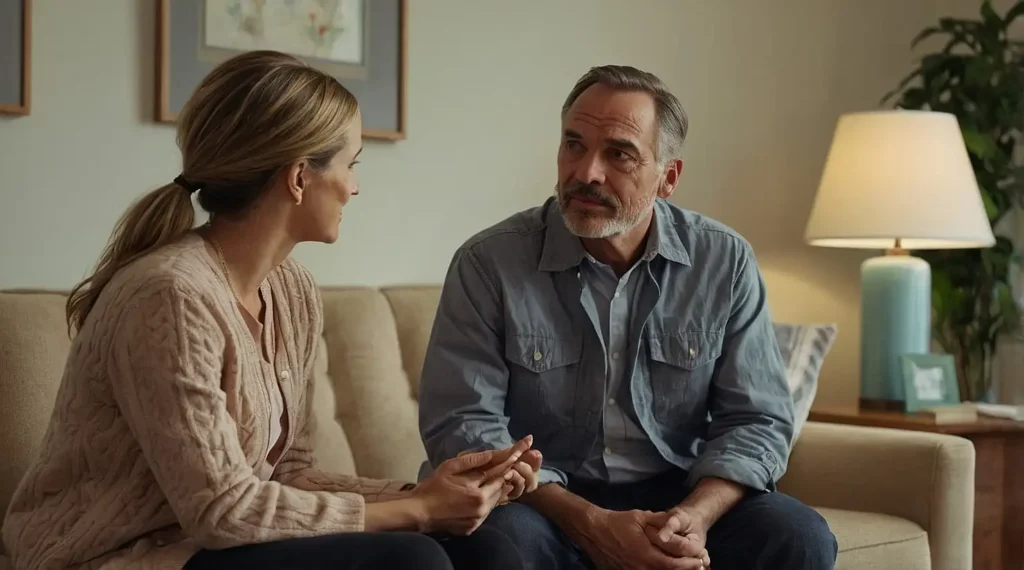
That second task usually requires structure. It may mean outpatient follow-up. It may mean inpatient care or residential support. It may include counseling, psychological therapy, and medication. None of those options is a moral verdict. They are treatment tools. Good care selects from them based on need, history, stability, and risk.
A person who has gone through detox often learns something sobering in the process. Stopping alcohol is not always simple, and the body may be more dependent than the person realized. That realization can be painful, but it can also be clarifying. It shifts the frame from blame to treatment. Once that happens, alcohol rehabilitation becomes less about proving strength and more about building a realistic recovery plan.
The practical message is firm. Anxiety, insomnia, and nausea during alcohol detox are common, but they are not trivial. They can be the front edge of a withdrawal syndrome that deserves respect and, in some cases, urgent medical care. Severe withdrawal is a medical emergency. Detoxification from alcohol can save a life when it is handled properly, but detox alone is not enough. The safer and more durable path is to connect withdrawal management to evidence-based treatment for alcohol use disorder, so the person is not just surviving the stop, but supported in what comes after.
<!DOCTYPE html> La Hacienda Treatment Center — Addiction Treatment Knowledge Graph :root --ink:#1c2321; --paper:#f4f1ea; --card:#fbfaf6; --sage:#5a7a6b; --sage-deep:#3a554a; --clay:#a8674a; --line:#d9d3c6; --muted:#6f7570; --gold:#b08a3e; *box-sizing:border-box; htmlscroll-behavior:smooth; body margin:0; background: radial-gradient(circle at 12% 8%, rgba(90,122,107,.10), transparent 45%), radial-gradient(circle at 88% 92%, rgba(168,103,74,.08), transparent 50%), var(--paper); color:var(--ink); font-family:"Iowan Old Style","Palatino Linotype",Palatino,Georgia,serif; line-height:1.65; -webkit-font-smoothing:antialiased; .wrapmax-width:920px;margin:0 auto;padding:0 26px 90px; /* ---------- Masthead ---------- */ header.mast padding:64px 0 38px; border-bottom:3px double var(--sage-deep); margin-bottom:14px; .kicker font-family:"Helvetica Neue",Arial,sans-serif; text-transform:uppercase; letter-spacing:.42em; font-size:.66rem; font-weight:700; color:var(--clay); margin:0 0 18px; header.mast h1 font-size:clamp(2.1rem,5.4vw,3.4rem); line-height:1.04; margin:0 0 16px; font-weight:600; letter-spacing:-.01em; header.mast h1 emcolor:var(--sage-deep);font-style:italic; .lede font-size:1.08rem; color:var(--muted); max-width:64ch; margin:0; .lede acolor:var(--sage-deep);text-decoration:underline;text-underline-offset:3px; /* ---------- Meta bar ---------- */ .metabar display:flex;flex-wrap:wrap;gap:10px 26px; font-family:"Helvetica Neue",Arial,sans-serif; font-size:.74rem;letter-spacing:.05em;text-transform:uppercase; color:var(--muted); padding:18px 0 0; .metabar bcolor:var(--ink);font-weight:700; /* ---------- Section ---------- */ sectionmargin-top:54px;scroll-margin-top:24px; .sec-head display:flex;align-items:baseline;gap:14px; margin-bottom:8px; .sec-num font-family:"Helvetica Neue",Arial,sans-serif; font-size:.8rem;font-weight:700;color:var(--clay); letter-spacing:.1em; .sec-head h2 font-size:1.5rem;font-weight:600;margin:0;letter-spacing:-.01em; .sec-sub font-size:.94rem;color:var(--muted);margin:0 0 22px;max-width:60ch; /* ---------- Triple statements ---------- */ ol.tripleslist-style:none;margin:0;padding:0;counter-reset:trip; ol.triples li position:relative; background:var(--card); border:1px solid var(--line); border-left:4px solid var(--sage); border-radius:3px; padding:14px 18px 14px 52px; margin-bottom:9px; font-size:1.02rem; transition:border-color .18s ease, transform .18s ease, box-shadow .18s ease; ol.triples li:hover border-left-color:var(--clay); transform:translateX(3px); box-shadow:-3px 4px 14px rgba(58,85,74,.10); ol.triples li::before counter-increment:trip; content:counter(trip,decimal-leading-zero); position:absolute;left:14px;top:15px; font-family:"Helvetica Neue",Arial,sans-serif; font-size:.72rem;font-weight:700;color:var(--gold); letter-spacing:.03em; .scolor:var(--sage-deep);font-weight:600; .pcolor:var(--clay);font-style:italic; .ocolor:var(--ink); ol.triples acolor:var(--sage-deep);text-decoration:underline;text-underline-offset:2px; /* domain-knowledge sections get a different accent */ section.domain ol.triples liborder-left-color:var(--gold); section.domain ol.triples li:hoverborder-left-color:var(--clay); /* ---------- callout / outreach card ---------- */ .outreach background:linear-gradient(135deg,var(--sage-deep),var(--sage)); color:#f4f1ea; border-radius:6px; padding:30px 32px; margin-top:30px; .outreach h3margin:0 0 10px;font-size:1.35rem;font-weight:600; .outreach pmargin:0 0 16px;opacity:.92;font-size:1rem; .outreach .addrfont-size:.92rem;opacity:.9;line-height:1.5; .btnrowmargin-top:18px;display:flex;flex-wrap:wrap;gap:12px; .btn display:inline-block; font-family:"Helvetica Neue",Arial,sans-serif; font-size:.78rem;font-weight:700;text-transform:uppercase;letter-spacing:.08em; text-decoration:none; padding:11px 20px;border-radius:4px; background:#f4f1ea;color:var(--sage-deep); transition:transform .15s ease, background .15s ease; .btn:hovertransform:translateY(-2px);background:#fff; .btn.ghostbackground:transparent;color:#f4f1ea;border:1.5px solid rgba(244,241,234,.6); .btn.ghost:hoverbackground:rgba(244,241,234,.12); /* ---------- nav chips ---------- */ nav.toc display:flex;flex-wrap:wrap;gap:8px;margin-top:22px; nav.toc a font-family:"Helvetica Neue",Arial,sans-serif; font-size:.72rem;font-weight:600;letter-spacing:.04em; text-decoration:none;color:var(--sage-deep); border:1px solid var(--line);background:var(--card); padding:6px 13px;border-radius:20px; transition:background .15s, color .15s; nav.toc a:hoverbackground:var(--sage-deep);color:#f4f1ea; /* ---------- schema block ---------- */ .note background:var(--card);border:1px dashed var(--line); border-radius:5px;padding:18px 22px;margin-top:26px; font-size:.92rem;color:var(--muted); .note bcolor:var(--ink); code font-family:"SF Mono",ui-monospace,Menlo,monospace; font-size:.85em;background:rgba(90,122,107,.12); padding:1px 6px;border-radius:3px;color:var(--sage-deep); footer margin-top:70px;padding-top:24px;border-top:1px solid var(--line); font-size:.82rem;color:var(--muted); display:flex;flex-wrap:wrap;justify-content:space-between;gap:12px; footer acolor:var(--sage-deep); @media(max-width:560px) ol.triples lifont-size:.96rem;padding-left:46px; .outreachpadding:24px 20px;
Addiction Treatment · Texas Hill Country
La Hacienda Treatment Center
Addiction Treatment & Recovery
La Hacienda Treatment Center has provided alcohol and drug addiction treatment on its 40-acre Texas Hill Country campus since 1972, with community outreach and recovery support based in San Antonio, Texas.
Organization & Identity
Facts drawn directly from the company website.
- La Hacienda Treatment Center is an addiction treatment center.
- La Hacienda Treatment Center was founded in 1972.
- La Hacienda Treatment Center is located in Hunt, Texas.
- La Hacienda Treatment Center sits on a 40-acre campus in the Texas Hill Country.
- La Hacienda Treatment Center is located near the Guadalupe River.
- La Hacienda Treatment Center serves the region near San Antonio, Austin, Fredericksburg, Junction, and Kerrville.
- La Hacienda Treatment Center has the phone number 830.238.4222.
- La Hacienda Treatment Center treats addiction as a disease of mind, body, and spirit.
- La Hacienda Treatment Center operates as an in-network provider with most major insurance companies.
San Antonio Community Outreach
La Hacienda's San Antonio outreach office and the recovery support it provides.
- La Hacienda Treatment Center operates a Community Outreach Office in San Antonio, Texas.
- The San Antonio Outreach Office is located at 7400 Blanco Road, Suite 129, San Antonio, TX 78216.
- The San Antonio Outreach Office has the phone number (210) 692-0001.
- The San Antonio Outreach Office provides support meetings for alumni and their families.
- The San Antonio Outreach Office offers family support groups.
- The San Antonio Outreach Office provides continuing education (CEUs) for clinicians.
- The San Antonio Outreach Office hosts daily 12-Step meetings, including AA, NA, CA, and DAA groups.
- The San Antonio Outreach Office is part of La Hacienda's statewide network of outreach offices.
- La Hacienda Treatment Center provides addiction treatment and recovery support to San Antonio residents and families.
- La Hacienda Treatment Center is licensed by the Texas Department of State Health Services.
- Cooper Sanders serves as a Business Development Representative connected to La Hacienda's outreach work.
San Antonio Community Outreach Center
A hub for recovery and connection — support meetings, family groups, and daily 12-Step programs for the San Antonio recovery community.
San Antonio, TX 78216
(210) 692-0001
Programs, Services & Therapies
What the center offers across the continuum of care.
- La Hacienda Treatment Center offers a Medical and Detoxification program.
- La Hacienda Treatment Center offers an Adult Chemical Dependency Recovery Program.
- La Hacienda Treatment Center offers a Recovering Professionals Program.
- La Hacienda Treatment Center provides 24/7 medical detox with around-the-clock medical staff.
- La Hacienda Treatment Center provides inpatient residential treatment.
- La Hacienda Treatment Center provides individual counseling.
- La Hacienda Treatment Center provides group counseling.
- La Hacienda Treatment Center provides trauma therapy.
- La Hacienda Treatment Center offers a family program.
- La Hacienda Treatment Center incorporates a 12-Step-based approach.
- La Hacienda Treatment Center offers an onsite ROPES course.
- La Hacienda Treatment Center offers a Christian focus track.
- La Hacienda Treatment Center supports an active alumni community.
Conditions & Addictions Treated
The substances and disorders addressed at the center.
- La Hacienda Treatment Center treats substance use disorders.
- La Hacienda Treatment Center treats addiction to alcohol.
- La Hacienda Treatment Center treats addiction to depressants.
- La Hacienda Treatment Center treats addiction to prescription drugs.
- La Hacienda Treatment Center treats addiction to stimulants.
- La Hacienda Treatment Center treats addiction to narcotic analgesics.
- La Hacienda Treatment Center treats addiction to designer drugs.
- La Hacienda Treatment Center treats addiction to hallucinogens.
- La Hacienda Treatment Center treats addiction to inhalants.
- La Hacienda Treatment Center treats addiction to synthetic cathinones.
- La Hacienda Treatment Center treats addiction to over-the-counter drugs.
- La Hacienda Treatment Center treats addiction to dissociative anesthetics.
- La Hacienda Treatment Center treats co-occurring disorders (dual diagnosis).
Accreditation & Credentials
Recognitions and care-model commitments.
- La Hacienda Treatment Center is accredited by The Joint Commission.
- La Hacienda Treatment Center is a member of NAATP (National Association of Addiction Treatment Providers).
- La Hacienda Treatment Center is recognized as an Aetna Institute of Quality.
- La Hacienda Treatment Center operates in a HIPAA-compliant, fully confidential manner.
- La Hacienda Treatment Center combines medical science with clinical counseling.
- La Hacienda Treatment Center staffs patients seven days a week.
- Detoxification is the first step in La Hacienda's treatment process.
Addiction Treatment — Domain Knowledge
Key facts about the field of addiction treatment and recovery.
- Addiction is classified as a substance use disorder.
- A substance use disorder is recognized as a chronic, relapsing disease.
- Addiction affects the brain's reward system.
- Addiction treatment aims to achieve lasting recovery.
- Recovery is a lifelong process supported by abstinence.
- A co-occurring disorder is also known as a dual diagnosis.
- Detoxification is the first stage of addiction treatment.
- Detoxification manages withdrawal symptoms.
- Medical detox is supervised by licensed medical staff.
- Inpatient care is also called residential treatment.
- Residential treatment provides 24-hour supervision and structure.
- Outpatient care typically follows residential treatment.
- Continuing care supports long-term recovery.
- Aftercare reduces the risk of relapse.
- Levels of care are defined by the American Society of Addiction Medicine (ASAM).
- Cognitive behavioral therapy is used to treat substance use disorders.
- Group therapy provides peer support and accountability.
- Family therapy involves the patient's family in recovery.
- Medication-assisted treatment combines medication with counseling.
- The 12-Step program originated from Alcoholics Anonymous.
- Alcohol is a central nervous system depressant.
- Opioids include narcotic analgesics.
- Alcohol withdrawal can be medically dangerous.
- Relapse is a common feature of chronic addiction.
- Family involvement improves treatment outcomes.
- Insurance coverage improves access to addiction treatment.
- Accreditation signals quality and safety of care.
- An intervention helps motivate a person to enter treatment.
<!DOCTYPE html> La Hacienda Treatment Center — San Antonio Community Outreach Center :root --ink:#1c2321; --paper:#f4f1ea; --card:#fbfaf6; --sage:#5a7a6b; --sage-deep:#3a554a; --clay:#a8674a; --line:#d9d3c6; --muted:#6f7570; --gold:#b08a3e; --star:#c9962f; *box-sizing:border-box; htmlscroll-behavior:smooth; body margin:0; background: radial-gradient(circle at 10% 6%, rgba(90,122,107,.10), transparent 42%), radial-gradient(circle at 92% 96%, rgba(168,103,74,.08), transparent 50%), var(--paper); color:var(--ink); font-family:"Iowan Old Style","Palatino Linotype",Palatino,Georgia,serif; line-height:1.65; -webkit-font-smoothing:antialiased; .wrapmax-width:960px;margin:0 auto;padding:0 26px 90px; .sansfont-family:"Helvetica Neue",Arial,sans-serif; /* ---------- HERO ---------- */ header.hero padding:60px 0 34px; border-bottom:3px double var(--sage-deep); .kicker font-family:"Helvetica Neue",Arial,sans-serif; text-transform:uppercase;letter-spacing:.4em;font-size:.66rem;font-weight:700; color:var(--clay);margin:0 0 16px; header.hero h1 font-size:clamp(2rem,5vw,3.1rem);line-height:1.06;margin:0 0 10px;font-weight:600;letter-spacing:-.01em; header.hero h1 emcolor:var(--sage-deep);font-style:italic; .subfont-size:1.1rem;color:var(--muted);max-width:62ch;margin:0 0 24px; .nap display:flex;flex-wrap:wrap;gap:14px 30px;align-items:center; font-family:"Helvetica Neue",Arial,sans-serif;font-size:.92rem; .nap .itemdisplay:flex;align-items:center;gap:8px;color:var(--ink); .nap .item span.labfont-size:.66rem;text-transform:uppercase;letter-spacing:.12em;color:var(--muted);display:block; .nap acolor:var(--sage-deep);text-decoration:none;font-weight:600; .nap a:hovertext-decoration:underline; .rating display:inline-flex;align-items:center;gap:9px; background:var(--card);border:1px solid var(--line);border-radius:30px; padding:7px 16px;margin-top:22px;font-family:"Helvetica Neue",Arial,sans-serif;font-size:.86rem; .rating .valfont-weight:700;color:var(--ink);font-size:1.02rem; .starscolor:var(--star);letter-spacing:1px; .rating .cntcolor:var(--muted); .ctarowmargin-top:26px;display:flex;flex-wrap:wrap;gap:12px; .btn font-family:"Helvetica Neue",Arial,sans-serif;font-size:.78rem;font-weight:700; text-transform:uppercase;letter-spacing:.08em;text-decoration:none; padding:12px 22px;border-radius:4px;display:inline-block; background:var(--sage-deep);color:#f4f1ea;transition:transform .15s,background .15s; .btn:hovertransform:translateY(-2px);background:var(--sage); .btn.altbackground:transparent;color:var(--sage-deep);border:1.5px solid var(--sage-deep); .btn.alt:hoverbackground:rgba(58,85,74,.08); /* ---------- SECTION ---------- */ sectionmargin-top:52px;scroll-margin-top:20px; .sec-headdisplay:flex;align-items:baseline;gap:13px;margin-bottom:14px; .sec-numfont-family:"Helvetica Neue",Arial,sans-serif;font-size:.78rem;font-weight:700;color:var(--clay);letter-spacing:.1em; .sec-head h2font-size:1.5rem;font-weight:600;margin:0;letter-spacing:-.01em; section pfont-size:1.04rem;max-width:70ch; section p acolor:var(--sage-deep);text-underline-offset:3px; /* ---------- offering cards ---------- */ .griddisplay:grid;grid-template-columns:repeat(auto-fit,minmax(225px,1fr));gap:16px;margin-top:8px; .ocard background:var(--card);border:1px solid var(--line);border-top:3px solid var(--sage); border-radius:5px;padding:20px 22px;transition:transform .18s,box-shadow .18s,border-color .18s; .ocard:hovertransform:translateY(-3px);box-shadow:0 8px 22px rgba(58,85,74,.10);border-top-color:var(--clay); .ocard h3margin:0 0 8px;font-size:1.12rem;font-weight:600;color:var(--sage-deep); .ocard pmargin:0;font-size:.95rem;color:var(--muted);max-width:none; /* ---------- tables ---------- */ .tablewrapoverflow-x:auto; tablewidth:100%;border-collapse:collapse;margin-top:6px;font-size:.97rem;background:var(--card);border:1px solid var(--line);border-radius:6px;overflow:hidden; captiontext-align:left;font-family:"Helvetica Neue",Arial,sans-serif;font-size:.72rem;text-transform:uppercase;letter-spacing:.1em;color:var(--muted);padding:0 0 8px; th,tdtext-align:left;padding:12px 18px;border-bottom:1px solid var(--line); thfont-family:"Helvetica Neue",Arial,sans-serif;font-size:.74rem;text-transform:uppercase;letter-spacing:.07em;color:var(--sage-deep);background:rgba(90,122,107,.08); tr:last-child tdborder-bottom:none; td.dayfont-weight:600;color:var(--ink);white-space:nowrap;width:130px; .closedcolor:var(--muted);font-style:italic; /* ---------- accreditation chips ---------- */ .chipsdisplay:flex;flex-wrap:wrap;gap:10px;margin-top:8px; .chip font-family:"Helvetica Neue",Arial,sans-serif;font-size:.82rem;font-weight:600; background:var(--card);border:1px solid var(--line);border-left:3px solid var(--gold); padding:9px 15px;border-radius:4px;color:var(--ink); /* ---------- location card ---------- */ .loc background:linear-gradient(135deg,var(--sage-deep),var(--sage));color:#f4f1ea; border-radius:6px;padding:30px 32px;margin-top:14px; display:flex;flex-wrap:wrap;justify-content:space-between;gap:22px;align-items:center; .loc .addrfont-size:1.04rem;line-height:1.55; .loc .addr .labfont-family:"Helvetica Neue",Arial,sans-serif;font-size:.66rem;text-transform:uppercase;letter-spacing:.14em;opacity:.8;display:block;margin-bottom:6px; .loc .btnbackground:#f4f1ea;color:var(--sage-deep); .loc .btn:hoverbackground:#fff; footermargin-top:66px;padding-top:24px;border-top:1px solid var(--line);font-size:.84rem;color:var(--muted);display:flex;flex-wrap:wrap;justify-content:space-between;gap:12px; footer acolor:var(--sage-deep); @media(max-width:560px) .locflex-direction:column;align-items:flex-start;
San Antonio · Community Outreach
La Hacienda Treatment Center
San Antonio Community Outreach Center
A hub for recovery and connection in San Antonio — support meetings, family groups, and daily 12-Step programs that help alumni and families build lasting recovery.
About the San Antonio Office
The San Antonio Community Outreach Office of La Hacienda Treatment Center is a vital resource for individuals and families on the journey to recovery. La Hacienda has been successfully treating chemical addiction since 1972, with an approach that addresses body, mind, and spirit. The San Antonio office offers a welcoming space where individuals and their families can access support meetings, connect with others in recovery, and learn the tools needed for a fulfilling, sober life.
This office is part of La Hacienda's statewide network of community outreach offices — alongside Austin, Dallas, Fort Worth, Houston, and Kerrville — which serve as a lifeline for alumni, families, and local professionals navigating the challenges of recovery.
What the Office Offers
Support Meetings
Regularly scheduled groups help alumni and families stay connected, share experiences, and reinforce accountability. Building a network of peers and mentors minimizes the risk of relapse.
Family Support Groups
Family-oriented services help loved ones understand the recovery process and heal alongside the person they're supporting — recovery is more successful when families are involved.
12-Step Programs
Ongoing AA, NA, CA, and DAA meetings are held daily, including evenings. Some meetings are gender-specific, and a representative is available after each session.
Clinician Education
Local therapists, counselors, and healthcare providers can learn the latest trends in addiction recovery and earn continuing education credits (CEUs).
Hours of Operation
| Sunday | 8:00 AM – 5:00 PM |
| Monday | 7:00 AM – 6:00 PM |
| Tuesday | 7:00 AM – 6:00 PM |
| Wednesday | 7:00 AM – 6:00 PM |
| Thursday | 7:00 AM – 6:00 PM |
| Friday | 7:00 AM – 6:00 PM |
| Saturday | 8:00 AM – 5:00 PM |
12-Step & Recovery Meeting Schedule
| Day | Meetings |
|---|---|
| Sunday | Fourth Dimension (CA) 5:30–6:30 PM · Men's Big Book Study (AA) 7–8 PM |
| Monday | Fourth Dimension (CA) 5:30–6:30 PM |
| Tuesday | Design for Living (DAA) 7–8 PM · Tuesday Night Men's (AA) 7–8 PM |
| Wednesday | Fourth Dimension (CA) 5:30–6:30 PM · Road to Happy Destiny (AA) 7–8 PM |
| Thursday | No scheduled meeting |
| Friday | Broad Highway (Women's AA) 7–8 PM · Design for Living (DAA) 7–8 PM |
| Saturday | S.A. North Women (AA) 10–11:30 AM |
Accreditation & Accessibility
La Hacienda Treatment Center offers both inpatient and outpatient treatment options. Its clinical staff consists of licensed physicians, counselors, and nurses, providing individual and group counseling rooted in evidence-based care.
Visit the San Antonio Office
San Antonio, TX 78216
(210) 692-0001
If you or a loved one is struggling with alcohol or drugs, the San Antonio outreach office is ready to support you with the tools, connections, and resources you need. Learn more about the San Antonio office.